MRI-guided prostate biopsy
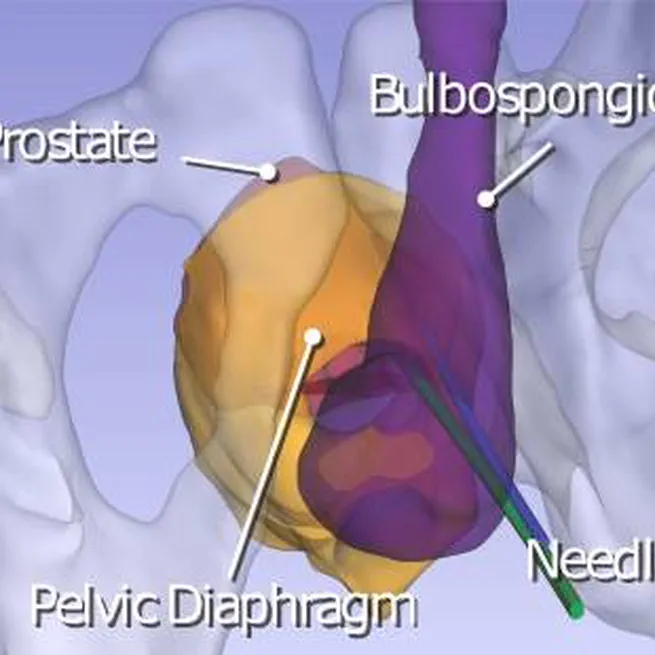
MRI-guided targeted biopsy has transformed prostate cancer diagnosis by improving lesion detection and reducing unnecessary biopsies, particularly in men with elevated PSA levels. The integration of multiparametric MRI (mpMRI) and MRI-targeted biopsy, supported by the Prostate Imaging Reporting and Data System (PI-RADS), allows for more precise sampling of suspicious lesions compared to traditional systematic biopsy. Despite these advancements, challenges remain in optimizing biopsy accuracy and workflow efficiency. Our lab is actively involved in several projects focused on advancing MRI-guided biopsy, including needle steering techniques, MRI-compatible robotic systems, and their translation into clinical trials, aiming to improve precision, reduce patient discomfort, and refine risk stratification for better clinical decision-making. Funding: NIH SBIR R44CA224853 Industry collaborators: Physical Science Inc.
Apr 6, 2025
Focal Ablation
Focal therapy (FT) is emerging as a promising approach in prostate cancer management, addressing the need for less invasive treatment while reducing over treatment, particularly in low- and intermediate-risk patients. The integration of multiparametric MRI (mpMRI) and MRI-targeted biopsy has improved patient selection for FT. As patient demand for minimally invasive options grows, FT continues to shape prostate cancer treatment by balancing oncological control with functional preservation. Our lab contributes to this evolving field by developing advanced methods for the planning and guidance of FT procedures, enhancing precision and improving patient outcomes. Funding: Brigham Research Institute - FSRE Department of Radiology - Pilot grant NIH SBIR Phase I - R43EB032676 Industry collaborators: Physical Science Inc.
Apr 6, 2025
MR-guided HDR prostate brachytherapy with teleoperated steerable needles
Oct 1, 2023
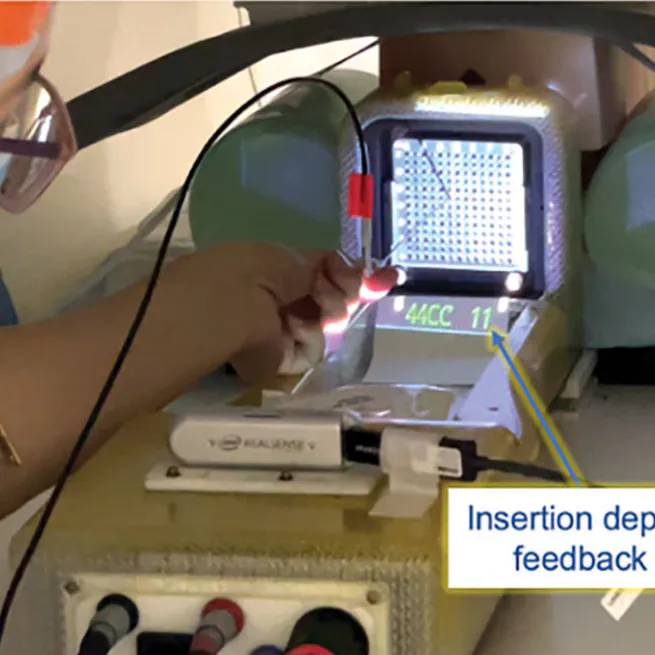
Tele-Operated MRI-Guided Needle Insertion for Prostate Interventions
Jan 1, 2019