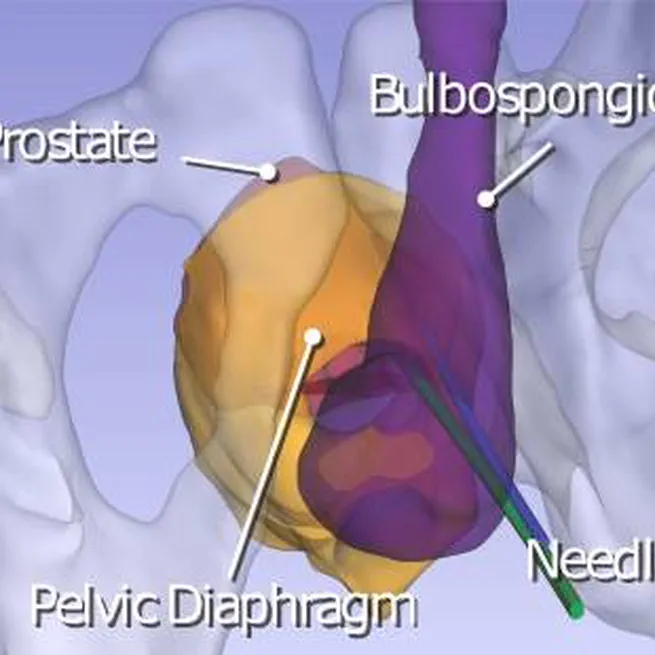
MRI-guided prostate biopsy
MRI-guided targeted biopsy has transformed prostate cancer diagnosis by improving lesion detection and reducing unnecessary biopsies, particularly in men with elevated PSA levels. The integration of multiparametric MRI (mpMRI) and MRI-targeted biopsy, supported by the Prostate Imaging Reporting and Data System (PI-RADS), allows for more precise sampling of suspicious lesions compared to traditional systematic biopsy. Despite these advancements, challenges remain in optimizing biopsy accuracy and workflow efficiency. Our lab is actively involved in several projects focused on advancing MRI-guided biopsy, including needle steering techniques, MRI-compatible robotic systems, and their translation into clinical trials, aiming to improve precision, reduce patient discomfort, and refine risk stratification for better clinical decision-making. Funding: NIH SBIR R44CA224853 Industry collaborators: Physical Science Inc.
Apr 6, 2025
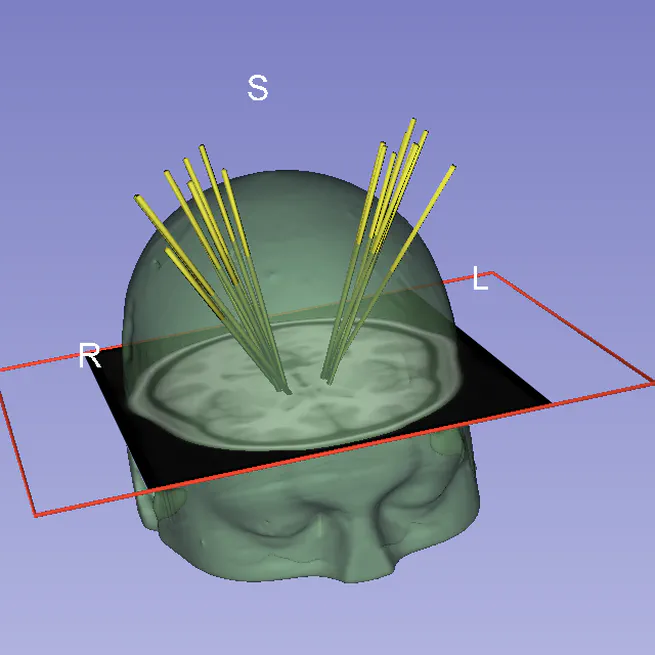
MRI-guided Deep Brain Stimulation
Parkinson’s Disease (PD) affects approximately 6.1 million individuals worldwide and has witnessed a rapid rise in incidence over the past two decades. Bilateral deep brain stimulation (DBS) targeting the subthalamic nucleus (STN) has emerged as a well-established and effective surgical intervention for advanced PD. This intricate procedure involves the implantation of electrodes within the STN, connected to a pulse generator, aiming to modulate neural activity and alleviate symptoms. The precision of DBS electrode placement within the STN is paramount for the procedure’s success. Our lab is collaborating with AiM Medical Robotics to advance the translation of their MRI-compatible robot into real-world clinical applications. Industry collaborators: AiM Medical Robotics
Apr 6, 2025
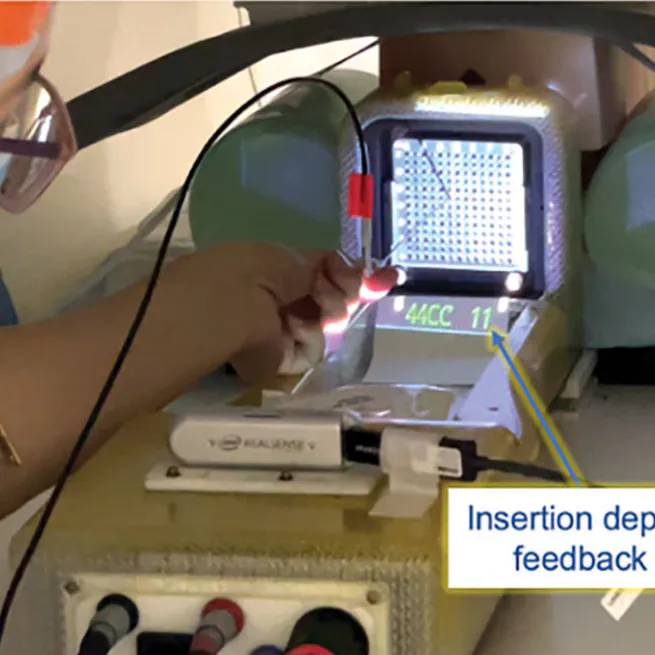
Focal Ablation
Focal therapy (FT) is emerging as a promising approach in prostate cancer management, addressing the need for less invasive treatment while reducing over treatment, particularly in low- and intermediate-risk patients. The integration of multiparametric MRI (mpMRI) and MRI-targeted biopsy has improved patient selection for FT. As patient demand for minimally invasive options grows, FT continues to shape prostate cancer treatment by balancing oncological control with functional preservation. Our lab contributes to this evolving field by developing advanced methods for the planning and guidance of FT procedures, enhancing precision and improving patient outcomes. Funding: Brigham Research Institute - FSRE Department of Radiology - Pilot grant NIH SBIR Phase I - R43EB032676 Industry collaborators: Physical Science Inc.
Apr 6, 2025
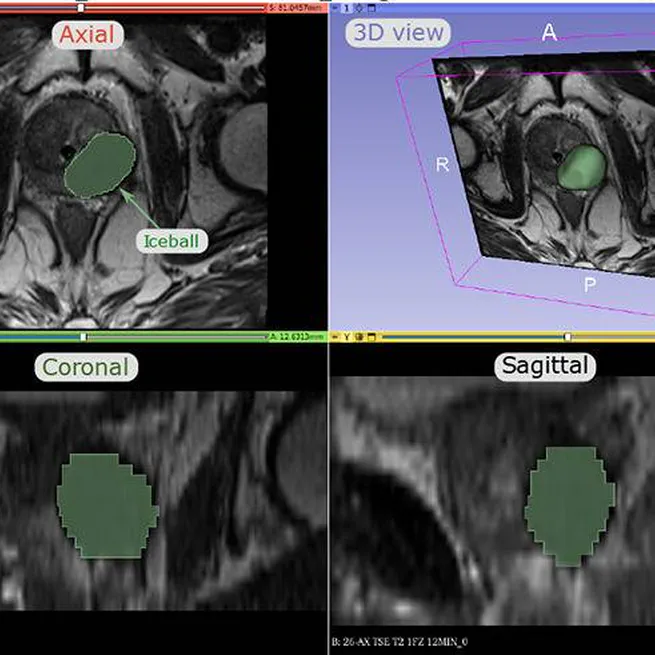
AI-based intraoperative planning for ablation
AI-driven iceball prediction is emerging as a powerful tool to enhance the precision of focal cryoablation. Traditional planning methods rely heavily on vendor specifications and physician expertise, often leading to suboptimal ablation coverage. While bioheat simulations and finite element modeling have been explored for isotherm prediction, their clinical adoption remains limited due to computational demands and the need for detailed patient-specific data. Our lab is actively engaged in multiple projects advancing AI-based solutions for real-time iceball prediction, needle placement optimization, and MRI-guided cryotherapy. By integrating machine learning with intraprocedural imaging, we aim to improve treatment accuracy, enhance workflow efficiency, and support broader clinical adoption of AI-driven focal therapy planning.
Apr 6, 2025